
From Mansa Musa to Modern Investors: The Power of Gold
4/19/20264 min read

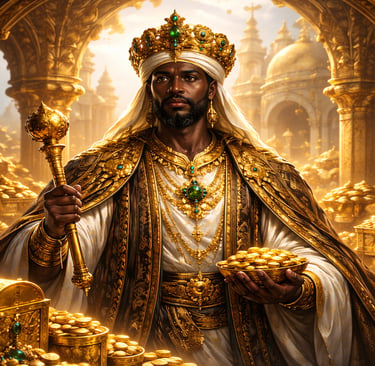
The Legacy of Mansa Musa: A Historical Overview
Mansa Musa, the illustrious emperor of the Mali Empire during the 14th century, is often recognized as one of the wealthiest individuals in human history. His reign from 1312 to 1337 marked a significant chapter in West African history, primarily due to his adept management of gold resources. The Mali Empire, which controlled a substantial portion of the lucrative gold trade routes, flourished under his leadership, leveraging gold as an economic powerhouse not only for Mali but also throughout the broader region.
One of the defining moments of Mansa Musa's reign was his lavish pilgrimage to Mecca in 1324, which not only showcased his immense wealth but also his status as a devoted Muslim. During this pilgrimage, he distributed gold liberally as a sign of generosity and piety, influencing local economies across North Africa. Cities like Cairo experienced a dramatic increase in inflation due to the copious gold he dispensed, illustrating the profound impact of his wealth on other cultures and economies. This journey spread not only his name but also that of Mali, positioning it as a significant player on the world stage.
Moreover, Mansa Musa's commitment to Islam helped the Mali Empire strengthen its cultural and educational stature. He established several madrasas and supported architects and scholars, which facilitated the introduction of Islamic architecture and learning in Mali. Through these advancements, gold transcended its role as mere currency; it became a symbol of power, prestige, and the prosperity of the empire. Mansa Musa's contributions to the economy and culture laid a foundational legacy that would echo through the centuries, illustrating the vital role of gold in shaping societies economically and culturally—an influence that is still salient in today’s investment landscapes.
The Timeless Allure of Gold: A Symbol of Wealth
Gold has captivated the human imagination for centuries, celebrated for its intrinsic beauty and unique properties. Its remarkable rarity, durability, and the ability to retain value have established gold as a desirable asset throughout history. As a natural element, gold is not easily tarnished, ensuring its lasting luster and appeal. Unlike many other assets, the value of gold remains relatively stable, making it a trusted store of wealth across different economies and eras.
The historical significance of gold is far-reaching. Ancient civilizations, such as the Egyptians and the Mayans, revered gold, crafting intricate jewelry and artifacts that symbolized power and status. The use of gold as a form of currency can be traced back to these early societies, where it facilitated trade and commerce, acting as a standard of value that transcended various cultures and regions. As a result, many societies established their own unique cultural beliefs surrounding gold. In various traditions, gold is synonymous with prosperity and fortune, often becoming a central element in rituals, weddings, and celebrations.
In addition to its cultural significance, gold continues to be a valuable security for modern investors amid economic fluctuations. Its role during financial crises has been particularly noteworthy; investors often turn to gold as a safe haven when other investments falter. The psychological appeal of gold—often viewed as a hedge against inflation and currency devaluation—contributes to its sustained allure in contemporary markets. As the world progresses and the financial landscape evolves, the enduring status of gold remains evident, solidifying its position as both a commodity and a symbol of wealth.
Gold Investment in the Modern Era
The landscape of gold investment has evolved significantly, adapting to the dynamics of the contemporary financial market. Modern investors have various options to engage with gold, ranging from traditional physical gold to more innovative instruments such as gold exchange-traded funds (ETFs) and mining stocks. Each of these avenues presents its unique benefits and risks, catering to different investment strategies and preferences.
Physical gold, including bullion bars and coins, remains a popular choice for those who prefer a tangible asset. Investors find comfort in holding physical gold as a hedge against inflation and economic uncertainty. However, it involves considerations such as storage, insurance, and high premiums over spot prices.
In contrast, gold ETFs offer a more convenient and cost-effective way to invest in gold without the challenges of physical ownership. These funds trade on stock exchanges and aim to mirror the price performance of gold, allowing investors to buy and sell shares easily. Furthermore, gold ETFs provide liquidity and do not require the same level of security measures as physical gold.
Another avenue for exposure to gold is through mining stocks, which represent shares in companies engaged in the extraction and production of gold. Investing in mining stocks can offer significant leverage to gold prices, as the profitability of these companies often correlates directly with the price fluctuations of gold. However, investing in mining stocks involves additional risks related to operational efficiencies, management practices, and geopolitical factors impacting mining operations.
Several factors influence contemporary gold prices, including economic indicators such as interest rates, inflation data, and currency fluctuations. Furthermore, market sentiment, geopolitical tensions, and supply-demand dynamics also play crucial roles in determining the value of gold. Investors must stay informed about these variables to effectively navigate the modern gold market and make strategic investment decisions.
Lessons from History: Wealth Creation through Gold
The historical narrative of gold as a symbol of wealth and power is well represented by figures like Mansa Musa, whose legendary pilgrimage to Mecca in the 14th century is still celebrated in discussions about the wealth of the Mali Empire. Mansa Musa's extravagant distribution of gold during his journey not only exhibited riches but also demonstrated the significance of gold in establishing economic influence. This event serves as a poignant reminder that gold has been revered for centuries as a store of value, a protective asset, and a medium of exchange.
Modern investors can extract valuable insights from Mansa Musa’s legacy. Primarily, it is essential to view gold not merely as a physical commodity, but rather as a strategic, wealth-preserving asset that can cushion against the volatility of financial markets. In times of economic downturns or inflation, gold often retains its intrinsic value, providing a safe haven for investors. This perspective encourages a balanced investment portfolio that includes gold as a form of insurance against uncertainty.
Additionally, the historical reliance on gold underlines the importance of diversification. Just as Mansa Musa amassed wealth through a variety of resources and strategic initiatives, today’s investors should consider integrating gold into their investment strategies alongside stocks, real estate, and bonds. Such diversification not only mitigates risk but also allows for the potential of steady growth in periods of economic upheaval.
As the dynamics of global economics continue to evolve, reflecting on historical figures like Mansa Musa may provide modern investors with guidance on safeguarding their wealth. By adopting a nuanced understanding of gold's role in both past and present economies, investors can better navigate the challenges of today’s financial landscape.

Contact
Reach out for expert gold services
Email & number
© 2026 Labs. All rights reserved. | Privacy Policy | Terms of Service | Designed by Bum Launch




Our Products


Our Services


Gold Ore
Gold Nuggets
Gold Dust
Gold Bars